Showing posts with label food. Show all posts

Sunday, March 20, 2016

muffin-pan-chicken-cups: a recipe

We're always messing around and creating/tweaking new recipes, and this one was too delicious not to share! I'm not really sure what to call them, so if you've got a good name, let me know!

For now, let's call them muffin-pan-chicken-cups (quite a mouthful, both the name and the actual food!)

Ingredients:
  • 1.5 pounds ground chicken
  • 1 egg
  • 1 cup chopped veggies**
  • 6 oz mozzarella cheese, chopped into small cubes
  • 1.5 tsp garlic powder 
  • 1.5 tsp dried basil
  • A dash of salt and pepper
**This time, I chopped two bell peppers and 1/4 of a Japanese kabocha (pumpkin-like squash) into thumb-nail sized pieces. You could really use any veggies you like, though!


Directions:
  • Preheat the oven to 400° F.
  • Grease a muffin tin (we used coconut oil on a paper towel).
  • Chop the veggies and the mozzarella into small chunks. Mix all ingredients in a mixing bowl until everything is combined.
  • Using spoonfuls (or handfuls) to scoop mixture into the muffin tin. Press down a bit to fill the cups. (I was able to get 10 muffin cups filled to the top with this mixture.)
  • Bake at 400° for 25-30 minutes.
  • Let them cool, and then enjoy!


Sunday, January 10, 2016

yummy yakiniku

If you've been in Japan for very long, you will probably have heard about yakiniku. If you're new to Japanese cuisine, yakiniku is translated as "grilled meat" and refers to a broad variety of bite-sized meats cooked on a grill. It's very easy to make yakiniku at home, and you'll often see locals cooking in this style with portable grills during festivals.

Yakiniku with veggies, rice, and lettuce
This style of cooking is also popular in restaurants, and as many have discovered, not all yakiniku restaurants are considered equal. Many of these establishments include all-you-can eat buffets or sets, where diners can choose their style of raw meats and veggies to cook on their own table-top grills. While it may be tempting to choose an inexpensive ¥1000, all-you-can eat yakiniku restaurant, the variety and quality of ingredients typically won't be very high. This is where Yakiniku King comes in!


Located on Highway 58 between Camp Foster and Kadena Air Base, Yakiniku King offers better quality meats, including several types of beef, chicken, pork, and seafood that are available in differently priced sets. The sets, which start at about ¥2600 per person for dinner, include a variety of different ingredients and meals to choose from. The mid-range set (referred to as the "Standard Course," which costs ¥2900) contains more than 100 different food options, to include rice and lettuce, meat and seafood, noodle dishes, Korean bibimbap, hot pots, various side dishes, and even dessert options!


Once diners have chosen their set, ordering is a breeze! All you have to do is choose the dishes you want to try, using a handy handheld digital tablet. There is even an English option for those customers who aren't able to read Japanese! Once the order is placed electronically, a server will bring your food and beverages right to the table. Orders are unlimited, as long as you place and eat them within the allotted 90 minute time frame.


While ordering on the tablet is entertaining, the real pleasure comes cooking and eating the actual meal. Once your raw food arrives, you can season and cook it to your liking with your table's built-in grill and the provided selection of sauces. Some meats come with sauce already and others come with only salt, so you can use soy, ponzu, lemon, or yakiniku sauce(s) to glaze your meat or use for dipping later on.


Customer service at Yakiniku King is wonderful! The servers can be called to refill drinks or provide a new grill net at the push of a button. The food is of nice quality and the vast variety of foods on the menu provides options for meat-lovers, for vegetarians, and for those who may have food allergies. It's no wonder this place has become one of our family's favorite places for a dinner with friends!


Tuesday, December 29, 2015

parties with panache: pizza recipes!

I've learned a great deal of things since finding out about my food allergies, and one of them is that social gatherings almost always include food of some sort! It was something I never really put much thought into before it became a matter of survival, and I think it's only when someone is put into that position that they realize how much of our sociality revolves around food. Holidays, birthdays, reunions, family gatherings, parties, end-of-week work gatherings, and even staff meetings include snacks, potlucks, meals, barbecues, and even restaurants. Because of this, those with food allergies have a lot more to think about and prepare for when it comes to being social.

Some venues are easier than others. Potluck picnics and beach barbecues are easy because the allergic person can simply bring their own food. When it involves work functions, friends' houses, and restaurants, though, things can get a bit more difficult.

There are definite social changes that happen when you develop food allergies. Those weekly meetups with friends at the local restaurant become awkward, either on the part of the allergy person who can't eat anything on the menu, or the friends who then feel sorry for them. I noticed this shift when I was finally diagnosed and suddenly had no safe restaurants. The invitations became few and far between in the name of not making me feel bad that I couldn't eat anything on the menu. Instead, it felt isolating to be constantly left out of fun events.

For this reason, we often hosted the parties and game nights at our house. We always had a "safe" area for my food and a potluck area for everyone else. It worked for a while and we loved being able to play host and hostess on special occasions and book clubs and get togethers. This became a nightmare though, when I realized that I was so sensitive that the food my friends brought over was causing cross contamination issues. Ben and I started experimenting with snacks and meals that could be made fairly easily and would feed several people so that having a get together didn't have to be food-less, but also wouldn't mean a Thanksgiving-like event with a whole day of cooking involved. It had to be something that adults would enjoy, but their kids would also eat. It had to be free of multiple allergens and something that could also be served for our vegetarian friends. We started with pizza: the quintessential and easily-customizable party food. After our first party serving the pizza, we had several friends requesting to come over again so they could partake again! Each time, we make a few favorites and try something new, so I thought I'd share some of our favorites in case you ever find yourself in a pizza rut!


The Basics:

For most of our pizzas, we prefer to use the Chebe flour mixes, because they are grain free and are pretty versatile. Many other blends are too watery or too starchy (or don't hold up well as leftovers). Each pizza also uses about a cup of sauce and 1.5-2 cups of mozzarella cheese (I use the Organic Valley brand).


The Sauce:

My favorite prepared sauce is the Organicville pizza sauce. It's got a nice flavor and thickness, and the vinegar is sourced from sugarcane and not corn like most other sauces. I purchase it from Vitacost, and for those of you in the states, I've seen it at Whole Foods, Sprouts, and Natural Grocers as well.

I often prepare my own sauce, which is great because I can adjust the thickness and spices as needed. Because we have typically lived in places where fresh, organic tomatoes were not always available, I had to search for a while to find a good substitute. I love the Bionaturae tomato paste, an organic product from Tuscany.

Ingredients:
  • 1 can tomato paste
  • 1 cup water (adjust for preferred thickness)
  • 1/3 cup extra virgin olive oil
  • 1-2 cloves minced garlic
  • 1/2 tbsp basil
  • 1/2 tbsp oregano
  • 1/2 tsp rosemary
  • 1/2 tsp thyme
  • salt and pepper to taste

Directions:

Mix all ingredients, adding the water last. Stir and add water to the thickness you prefer. For the best results, let the sauce rest for an hour to enrich the flavor. Then, spread it on the dough. Remember not to add too much sauce, as you don't want your dough to become soggy! I add my favorite spices to the following toppings and then bake the pizza at 400 degrees for 20 minutes.

**Tip: If you're going for a more creamy sauce, substitute the water with a nice, thick coconut milk! These are the two I use most often: Native Forest and Aroy-D.


The Toppings:

There are several different topping variations we've used with the basic sauce and cheese combination.

  • Pepperoni and black olives. Before I was as corn sensitive as I am at this point, I was able to use pepperoni. This is no longer an option for me, but I still do have a safe brand of sausage, so we use sausage with black olives now.
  • Pineapple and peppers. This has been a favorite with our friends - simply dice some different colors of bell peppers along with some pineapple slices for a colorful and tasty combination!
  • Yakiniku meat. We make yakiniku pretty frequently (thinly sliced, grilled beef) and sometimes use the leftovers as a pizza topping. This tastes delicious with black olives, pineapple, and/or bell pepper slices!
  • Cream cheese. This is an idea we got from a Japanese pizza shop. After putting the sauce on, but before adding the cheese, drop some small dabs of cream cheese around the pizza (no need to spread!) I use the Organic Valley cream cheese, as it's the only one I don't seem to be allergic to. 
  • Cream cheese and kabocha. A bonus addition to the previous entry that we recently discovered is kabocha (Japanese winter squash). Slice the squash into quarters and then slice one of the quarters into thin slices. After layering the sauce, cream cheese, and mozzarella, add the squash slices and some garlic to the top before baking.

Stay tuned for some non-red sauce based pizzas, coming up soon!


Sunday, October 5, 2014

corn, corn everywhere (my search for safe-tea)

(Yes, I'll admit, the pun was intended.)

I know I've shared several blog posts about my journey with celiac disease, but I haven't shared much about my quest to go corn free. It's because, even after a year and a half, I am still learning new things about this allergy every day. There are still things that shock me about the use of corn in America and products that I never would have thought would make me sick.

It's crazy to me how much corn is used in our country. In EVERYTHING.

The weirdest part of this is that most people don't know this. Most people think of corn as an ingredient in bagged tortilla chips or packaged tamales or sweet things with high fructose corn syrup, but in reality you would be hard-pressed to find an item on any American grocery store shelf that doesn't contain corn in some form or another.


This is what has made it so difficult in my journey to health. At first, I thought I would just have to avoid foods that had corn, corn starch, and corn syrup. Boy, was I wrong. I cut out the vegetable oil and the non-dairy butter  and the yeast and the baking powder and the vinegar.

Still, I was getting sick. I did more research and learned that corn can go by more than 170 different names, most of which don't even say the word "corn".

Maltodextrin (which is added to most grain products)
Citric Acid and Lactic Acid (and many other food acids)
Dextrose (a sugar in most packaged foods)
Xanthan Gum (a binding agent used in most gluten free foods)
Vitamin A (used as a fortifying vitamin in juices and milk products)

Ingredient labels for Rice Chex and Greek yogurt. As you can see, both of these gluten
free and considered-healthy foods have a huge number of possible corn-containing ingredients.
(Click the picture to enlarge.)

I don't have all of them memorized. I have a list that I have to check every time I shop for food, which gets exhausting. The worst part is that these ingredients aren't always corn derived. Most of the time, yes, but sometimes no. Any time I find a new product, I must email the company to figure out whether the ingredient(s) in question might be derived from corn. Sometimes a company is straightforward and answers the question. Other times, the representatives refuse to answer because the ingredients are proprietary (or because they just don't know what is in their products).

It's taken the better part of a year and a half to cut out as much corn from my diet as I can. Even now, there are reactions from foods that don't have corn labeled on the packaging that, upon research and shared experiences with other corn allergy friends, do indeed contain it.

Like anti-mold sprays on most produce, anti-cracking agents on egg shells, vitamin enriched bottled water, and cleaning sprays on meat.

Then we move on to packaging. Yes, packaging. As if we corn-allergy-sufferers didn't have enough to worry about, our country is now using corn based plastics and cornstarch based papers in which to package the food. While I'm all for finding new and innovative biodegradable materials, they are usually made from corn and this is a problem for those of us who react to small amounts in our food.

Not long ago, I saw an ad that Kia is now using corn based plastics in their cars. Upon further investigation, I found that these new cars have 53 pounds of eco-friendly, corn-based plastics. I will admit that my initial reaction to this included a groan and a hand to my forehead. While I'm not skin sensitive to corn at this point in my life, I know others who are, and this is a huge concern.

Courtesy of Live Corn Free
The reason for this post is that I recently read a few articles on hidden ingredients in tea. The various writers investigated the ingredients found in tea and teabags, and were shocked to find out how much junk was really there. Pesticides and corn-containing "natural flavors" were in many of them, whether in the tea itself or the packaging. Many of these teas, banned throughout Europe and much of Asia, tout health benefits when they could actually be detrimental to tea drinkers' health.


I used to drink tea, and sadly had to quit when going gluten/corn free. I knew I was reacting to something in the tea, but I could never figure out what the issue was since my teas were labeled as gluten and corn free. (I will tackle the issue of product labeling another day...) After reading the article, I decided to embark on my own investigation to see if there were any gluten free/corn free/pesticide free teas on the market. While doing my research, I learned more about the pesticides and/or GMO ingredients in most of America's tea. I learned about the natural flavors used and where they are derived from (usually corn, but sometimes soy or wheat). I learned that loose leaf teas are often sprayed with dextrose or maltodextrin to keep them from molding and to enhance flavor. I learned about the packaging of the tea bags, which often contain either corn starch or corn based PLA. Honestly, I learned a lot more than I ever really wanted to know (ignorance is bliss, right?)...but I finally found some teas that might be trustworthy and safe to drink!

**Please note, company ingredients can change at any time, so please trial at your own risk!**


Numi Tea: Their teas are organic with no natural flavors and no pesticides. The company is devoted to being eco-friendly, and their bags are made from manila hemp cellulose and directly sourced bamboo.

Traditional Medicinals: This is another company that does not add natural flavors to their teas. They are part of the Non-GMO Project and do not use pesticides on their tea ingredients. Their teabags are made from manila hemp and raw cotton. (Just be aware that some of their flavors include extracts - stay away from these, as they are often corn derived! The representative I talked to mentioned they are in the process of doing away with these.)


If and when I find any others, I'll add them to the list! Let me know if you have any to add. Happy (tea) drinking!


Monday, February 17, 2014

memories and maple syrup: a paleo barbecue sauce recipe

I've never been a fan of barbecue sauce. Living in Reno for so long, I always loved the summer activities. The Balloon Races, Hot August Nights, the Air Races...and the Rib Cook-off. With 500,000 visitors and dozens of barbecue-rs each year, I was bound to eventually find a sauce that tasted right to me.

Ribs + friends = a good day

I remember the year I finally found a sauce that I liked! After getting married and moving, my mom would get me a bottle nearly every summer to put in my Christmas stocking.


The only barbecue sauce I've ever liked!

After going gluten and corn free, most sauces were suddenly not safe for me to consume. Most of them contain soy sauce (which has wheat) or corn syrup or maltodextrin, which are all red flags in our household.

My hubby does enjoy a good barbecue sandwich occasionally, though, so finding a safe version was something I always knew I would eventually need to find. In doing so, I realized that I could make a version that I might actually enjoy too!

I've always liked my barbecue sauce more sweet than tangy, so I tried experimenting with maple syrup. You could probably use honey in lieu of the maple if you prefer a more honey mustard-y vibe. (I'll probably try it next time I make this.) Hope you enjoy, and let me know if you try it with a different combination!

Paleo pork sandwiches with the maple barbecue sauce!

Ingredients:
  • 1 cup ketchup (I use Organicville, which is gluten and corn free!)
  • 4 tablespoons organic apple cider vinegar
  • 1/2 cup 100% maple syrup
  • 1 tablespoon chopped onion or onion powder
  • 1 tablespoon coconut oil
  • 1 tablespoon ground mustard 
  • 2 garlic cloves
  • 1/2 teaspoon salt (or more, to taste)

Directions:
  1. Mix all ingredients in a saucepan and bring to a boil.
  2. Reduce to a simmer and cook uncovered for 20 minutes, stirring occasionally.
  3. Use immediately or refrigerate in a glass jar for later use.


Friday, February 7, 2014

a little bit of hawaii: a paleo chicken recipe

I have a secret.

Okay, well it's not really a secret...but I LOVE pineapple.

I think it's the perfect chilled summer fruit on a hot day. It's great in the winter to remind me of summer. It's amazing in smoothies. On top of ice cream. On pizza. Basically, it's one of the most diverse fruits I know of and I love to cook with it.

I have another secret.

Until a year ago, I had never cut a pineapple.

I feel silly saying this now, but it was so easy to buy pre-cut pineapple or even canned chunks of the delicious fruit. With all of my food sensitivities now, I find that the more self-preparation I can do, the more secure I feel that I won't get sick.

Plus, pineapples aren't as difficult to chop up as I always thought they would be! My dream for next summer is to find a pineapple corer to make the process even easier (and to help keep down the amount of pineapple wasted by cutting it up with a knife.)

We picked up a pineapple a few weeks ago, so I decided to do a bit of experimenting. It was more of an "add a bit of this and a dash of that" situation, but it was delicious! It's similar to a Hawaiian-shoyu chicken casserole. I made it again today and wrote it all down so I could share it with you! You can alter any of the ingredient amounts to taste.


Ingredients:
  • 4 large boneless, skinless chicken breasts
  • 1 pineapple
  • 2-3 bell peppers (I like to get three different colors to make it more festive!)
  • The juice of 1 large orange (or approx. 1/3 cup of fresh orange juice)
  • 1/3 cup raw honey
  • 1/3 cup coconut aminos (or soy sauce if you're not worried about being Paleo)
  • 2 tablespoons organic tomato paste
  • 2 cloves of garlic, pressed (or two tsp. minced garlic)
  • 1 teaspoon salt 
  • 1/4 teaspoon pepper

Instructions:

Preheat the oven to 375. Cube the chicken and pineapple; put in a 9x13 inch casserole dish. Slice bell peppers and add them to the dish. 

In a separate bowl, mix all other ingredients. Spoon the mixture over the chicken, pineapple, and pepper mix. Stir well to coat chicken. Cover and bake for approximately 40 minutes.  (Note, our oven cooks a bit differently than others, so your timing may be slightly different.)


I've put this over rice (of course, that would negate the Paleo-ness of the recipe) and over cauliflower rice. Today, I used it as the stuffing for grain free fajitas (click here for the tortilla recipe) and it was delicious!

Friday, January 10, 2014

the path to recovery: 10 things about celiac I wish I knew before

I've had a surprising number of people tell me recently that they think they might have some level of gluten intolerance, and they have asked for advice on starting this journey to healing. I figured it was high time I posted some of the pointers and pitfalls I have learned while going through my own Celiac journey.

1. Get tested. There are a few different tests doctors can do to diagnose Celiac/gluten intolerance. One is a blood test, which is known to be somewhat inaccurate. Many people with gluten issues will get a negative on the blood test, but it's a start and it's easy to do.

The more complex way of getting tested is an endoscopy. Many doctors will suggest this, and many will say it's an unnecessary surgery if you don't know what's wrong. The problem is this: to get accurate results on an endoscopy, you have to eat gluten consistently for several weeks. If you go through an elimination diet, cut gluten, feel better, and decide to do an endoscopy to back up your results, you will have to start eating gluten again for six weeks and go through all the pain and suffering of reintroducing it into your now-healing body. My suggestion is to research the symptoms to see how many you have, and talk to your doctor to make the best decision for you. Everyone is different and, unfortunately, there is no one perfect way to go about it.

2. Cut out the gluten. Once you find out that you have Celiac or gluten intolerance, the key to remember is that NO gluten is ok.

None.

Not even a speck, (probably) for the rest of your life.

I will harp on this over and over again, because mainstream media and most of your friends will not understand this. They will tell you over and over again that because Celiac is not an allergy, a little bit won't hurt you. Of course, seeing celebrities tweet about their gluten intolerances while posting pictures of themselves eating cheeseburgers and pizza the next day doesn't help our plight.

What they don't understand is that Celiac an Auto-Immune disease that actually causes your body to attack ITSELF any time you ingest gluten. The amount of gluten that you can fit on the nail of your pinky finger can cause severe reactions and mucosal damage to your intestines.


Cutting out gluten can seem easy to an outsider: stop eating bread and crackers and you're good, right? Well, it's not quite as easy as that. Because everyone is different, you may find you react to even the slightest touch of gluten. A "gluten free" label on a box doesn't automatically mean a product is processed in a dedicated gluten-free factory. Cross contamination is a very serious threat to those of us who cannot tolerate gluten in any way, shape, or form. I have found the internet to be a necessary tool while grocery shopping. (I will admit our first few months of grocery trips were filled with anxiety and internet searches in the middle of each aisle.) Most websites will have a "gluten" entry in the FAQ section, telling you whether their factory has dedicated lines or factories for their products.

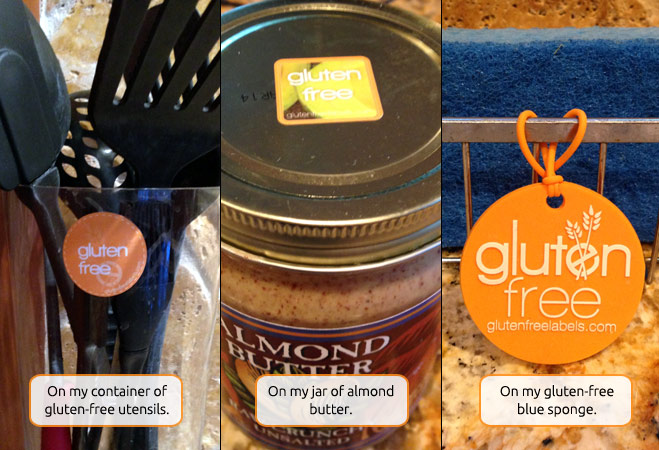
Cross contamination is to be expected in factories and restaurants, but it can also happen in your own home. I suggest replacing your pots and pans, your toaster, cooking utensils, Tupperware/storage containers, and any non-stick or plastic cooking appliances. Disinfect your microwave and fridge. It's easier for a Celiac to have a dedicated gluten free kitchen, though that is not always feasible for everyone. If you must have gluten in the house, store it in a separate area and disinfect all counters and appliances between cooking with gluten and preparing your food. Label your gluten free utensils and store them in a separate area. This was something I learned the hard way, and hope that you won't have to.

Photo courtesy of Gluten Dude
The most important thing to remember is that cheating will set back your healing. It might be easier to stop at a fast food joint than to think ahead and pack snacks, but your body will regret it in the end.

3. Beware of hidden gluten. Gluten is everywhere. I once was sick for almost a month because the eggs we bought were sprayed with an anti-cracking spray containing gluten. Do your research, because there are naturally gluten free products that could, in fact, contain gluten. Oats, for example, do not have a gluten protein, but are often processed in factories (or planted in fields) also containing wheat. Certified gluten free oats are a must for anyone with Celiac. Some fruits are sprayed with gluten-containing chemicals for preservative purposes.

Gluten can also be found in several non-food places. Glue, makeup, detergent, shampoo, lotion, and hairspray can have gluten in them. If you find that you are still getting sick despite cutting out gluten from your diet, you may want to check into your other products. Pet food is another place to watch - you feed your pet something with gluten, your pet licks itself (or things around your house), you touch it and then touch your face or mouth or food, and voila, sick central.

4. Find a blog or book or support group. They are all over the place. Finding a community (or author  or blogger or friend) who has Celiac can be a huge part of the healing process. Not only can others help you to troubleshoot issues, help you find recipes and brands that are safe, but they can help you to realize that


you

are

not

alone.

Some of my favorite bloggers are Gluten Dude and Celiac and the Beast. They both use humor and sarcasm to relate their Celiac stories and advice. They are my kind of people. If that's not your style, all you need to do is google "celiac bloggers" and hundreds of them will come up. Just make sure that whoever you follow has done the research and knows the facts. The last thing you want to do is to base any of your lifestyle changes on someone who doesn't know what they are talking about.

5.  Keep a food diary. You have probably done this in your journey to figure out what the heck was wrong with you, but I would recommend keeping it for a while. The reason for this is that down the road, you may find that you have developed other food allergies and intolerance. Around the time of my diagnosis, I found out I was lactose intolerant. About six months later, I had to do another elimination round to find out that I can't eat anything with corn or corn derivatives.

6. Don't rely too heavily on any one food while you heal. I wish I had known this when I was a baby Celiac. I had my mourning period and then started to find new recipes. We had corn tortillas available here, and it became Mexican night. A few nights a week. Tostadas, and tacos, and burritos galore. Until a few months later when I started feeling awful again. Relying too much on one food (in this case, corn) while your gut is healing can lead to an intolerance down the line.Vary what you eat and go easy on the grains while you heal.

7. Learn your symptoms. If you are eating gluten continually now, you probably have some long-term discomfort. Once you make a commitment to go 100% gluten free, though, your symptoms will change. Your body is healing, and will react severely upon ingesting even a small amount of gluten because it's now a foreign substance. Knowing your own personal symptoms will help you to narrow down whether you ate something with gluten (and writing in your food diary will help you pinpoint what it was) or whether you're just feeling under the weather.

Unfortunately, everyone's Celiac is different. While there are some symptoms that most Celiacs have in common (like gastrointestinal issues like flatulence, diarrhea, reflux, bloating, and being severely over or underweight due to malabsorption), there are many that are a bit more rare, including neurological issues (like anxiety, memory loss, irritability, and migraines).

For instance, I nearly always have a panic attack, brain fog, intense sleepiness lasting for days and then insomnia lasting for weeks, and stomach pain when I have eaten something with gluten in it, in addition to several of the classic symptoms.

Infographic courtesy of Gluten Dude 
8. Know that some of the symptoms you feel now will go away, and others may not. Depending on what your symptoms are, how long you've gone undiagnosed, and your body type, you may feel better immediately or you may have long-term symptoms that will continue. These symptoms could be residual effects from the Celiac, or other disorders that are common in those with Celiac, like IBS, Hashimoto's, arthritis, or even Lupus.

In my case, the asthma and migraines cleared up almost immediately, and typically only bother me when I've been contaminated. Other symptoms, like the lack of energy, constant heartburn, and aching joints are issues that started with Celiac and haven't gone away for good.

There are things you will have to learn to live with, and there are a lot of nice natural remedies to help ease them a little bit. Peppermint oil, activated charcoal, and papaya supplements can help ease the pain after a "glutening." Also keep in mind that several of your long-term symptoms are caused by the malabsorption of your food and vitamin loss. I recommend talking to your doctor and checking to see if you have any vitamin deficiencies.

9. Eating out can be difficult...but not impossible. Apps like Find Me Gluten Free are a lifesaver to me when we travel in the U.S. I always go through the app and read reviews and then call the restaurant, speaking to a manager. Since I have several food intolerances, I explain ahead of time the accommodations I will need. Sometimes the manager will tell me it's not possible, and that's okay. I'd much rather learn that in a phone conversation than an hour after I've eaten. If the manager sounds confident and is able to explain the restaurant's policy on cross-contamination, we will make a reservation for a day and time that manager will be there at the restaurant.


When we arrive, I ask the host or hostess to talk to that manager. I introduce myself and they will usually seat us, introduce us to the servers, and go through their policies again to ensure the server is aware of how serious the condition is. Many restaurants are used to people coming in and asking for gluten free items, but very few of them are asking from the standpoint of avoiding illness, so it's important to make the distinction.

It does become tiring to do this EVERY TIME you go out and eat, but it's worth it to stay healthy. Eventually, the people around you will realize that you wouldn't go to all this length for a fad diet and they may even start to advocate for you. Several times this summer, friends and family members were the ones to ask the servers about their gluten free menus or kitchen policies so that I didn't have to.

10. On the note of friends... You will probably have friends, relative, co-workers, acquaintances, or even strangers give you their opinions on your "gluten issues." Some will be loyal and do everything they can to learn about Celiac and how to help you, and some will be fiercely opposed to anything being wrong with you.

You may have a mourning period as you realize that your whole life will revolve around your diagnosis for a while, until it becomes second nature.

As you realize that social engagements will never be the same, and traveling becomes stressful instead of relaxing and adventurous. 

As you come to terms with some of the symptoms that may never go away all because of a silly protein in some too-common grains. 

As you start to find some stability and revel in your new-found baking prowess, only to realize that your newest batch of muffins or bread loaves are crumbly and tasteless.

It gets tiring having to argue with people that Celiac is a disease and not a fad, but don't let it get you down. You will find out quickly who your true friends and supporters are - and they will help you get you through this. Surround yourself with people who are positive and encouraging, because you will probably have enough emotional roller coasters all on your own as you go through this lifestyle change. (This is also a good reason to get involved with a support group or community or even blog - the Celiac community is a very outspoken and supportive one.)

And then you'll get to that point where you realize you haven't been contaminated in months, instead of days. You'll impress your friends with your "icky gluten free food" that was so delicious, they didn't realize it was gluten free until you told them. You'll stop craving gluten-y food all the time, because you'll finally feel like yourself again. You won't feel the need to check every single product over and over again to double check that there isn't any gluten in the ingredients (though it's good to check occasionally since companies change their practices all the time.) You will come to terms with your disease and realize that it's only a small part of you, that you've overcome it and taken back your life.

You will know that not only can you survive this, but you can thrive.


I know this was a long post, but in all honesty, it sums up what I've learned over the past year and a half. It's what I wish I had found when I was first diagnosed, and I hope that it's able to help even one person as they start the road to healing. If you have any questions, please feel free to leave a comment or hit me up on facebook!

Thursday, July 11, 2013

oregonian options: a gluten free guide to traveling and eating in oregon

It's easier to find gluten free options in a large city, but what about when you're on the go, road tripping? We had some hits and misses while traveling.

After Portland, we headed to the beach. We found a restaurant in Tillamook (Pacific Restaurant) via the Find Me Gluten Free app, and decided to try it out. Typically, I call a restaurant ahead of time to confirm they have gluten free options, ask about possible corn free options, and to ask what precautions they take to keep cross contamination to a minimum. In this case, though, we didn't have signal and were not able to call ahead.

The restaurant was easy to find, and when we walked in, I asked all of my questions to the busboy. He was not positive of the answers and went to ask the chefs (always a good sign in my book - asking the chef means they are taking me seriously). He came back a few minutes later and said that there were some options that would be safe for me, so we got a table and a menu.


Our server, on the other hand, did not take the same care and consideration. She tried to convince me that the fish and chips were gluten free since they were rice flour, and then argued with me when I mentioned that cooking them in the same oil vat as regular food means there will be cross contamination. She acted as if I were the highest maintenance person in the world when I asked her to check and see if their salad dressing contained any corn syrup, and if it had not been for the busboy who already had answered my original questions, I would have gotten up and left right then.

Luckily they had a few things that were truly gluten/corn free. I ordered clams in a cream sauce with a small side salad. While these were not nearly as filling as a regular meal would have been, I was grateful to be able to eat anything there without getting sick. The clams and sauce were delicious, but the salad was sparse and the dressing (small containers with olive oil and vinegar) left much to be desired. If you are visiting Tillamook and are eating at Pacific Restaurant, I recommend speaking to a chef personally to make sure the food you are ordering is truly gluten free and is not cooked in the same oil or on the same pan as gluten containing food.


During our stay at the beach, I only ate the food I had brought with me, purchased at the Whole Foods in Portland and the Fred Meyer in Tillamook. Traveling back to Reno, though, we had to stop a few times along the way. Before we left, I researched restaurants within a hundred miles of where we had planned to stop for lunch. After talking on the phone with all three, Thai Bistro in Medford seemed like the best bet. The woman on the phone said they handled people with food allergies all the time and it wouldn't be a problem to make my food gluten free.


We arrived and were at the halfway point between Portland and Reno. We were glad to have a place to stop for a while, and walking inside, it smelled delicious! I went through my spiel with the server, and as nice as she was, she (like the server at Pacific Restaurant) just didn't seem to understand the effect of cross contamination. After stressing that my food had to be prepared on clean surfaces and with sanitized utensils, she asked me if I wanted to get a side salad from the salad bar. I explained that I could not eat from the salad bar because other people may have touched the tongs to their food and contaminated them, and she looked at me like I was crazy.

Honestly, this should set off warning bells in my head, but I had had such good luck so far that I figured it was just me being paranoid.

The food was delicious and well-priced. I got pad thai and chicken satay. It hit me the next day, though, and I was sorry that I hadn't listened to my gut and opted out of eating. There was definitely not gluten IN my meal, because the effects would have been much worse, but there was cross contamination that was bad enough to cause a panic attack, migraine, nausea, and a plethora of other symptoms.


If you are only gluten sensitive, I highly recommend Thai Bistro because of the price and great tasting food, but if you are anywhere near as sensitive as I am to cross contamination, I'd steer clear!


Tuesday, May 1, 2012

the amazing race, wind-swept umbrellas, kebabs, and the search for wonderland

Our last day in Tokyo was a wet one. Having diligently watched the weather reports for our weekend, we were expecting this and planned as many indoor activities as we could for the afternoon. The morning was bright and beautiful, though, and we started it out Amazing Race style.

Since the night bus back to Misawa left at 9 pm, we knew we'd have a huge amount of time to hang out in Tokyo prior to leaving. We did, however, want to make sure we knew exactly where to go since the terminal was not at Shinjuku Station. We had some rudimentary directions in Japlish on how to get to the terminal, and the three of us were having quite the time trying to figure out the best way to get there (especially since we'd have all of our luggage when going to catch the bus later that night.)

We finally decided to go about it Amazing Race style and each go our own ways. Ben chose the underground and walked through a several-kilometer-long cobblestone tunnel that runs underneath Shinjuku. I took to the streets and navigated through the Shinjuku district above ground (of course, this was right around the time it decided to start raining). Devon braved the subway system and had to find her way to the platform inside Shinjuku Station.

We all arrived within 10 minutes of each other, with Ben in the lead. So with our plans set in place for that evening, we were free to spend the rest of the day exploring more of Tokyo.

 Ben's photo after arriving at the terminal.

 Devon's adventure through the subway system.

My view as I reached our destination.


We jumped back on the subway and headed back to Roppongi. We had seen it at night but wanted to go up into the Mori Building to see the amazing view of Tokyo. As we arrived in Roppongi, we realized we hadn't eaten since our Starbucks early in the morning. We stopped at a hole-in-the-wall kebab place and had the best 500 yen meal we've had since arriving in Japan. After we finished, we walked back to the spider and tried to take a few pictures. I say "tried," because the wind and rain picked up so heavily that we had to seek cover almost immediately. I did get the camera out just in time to capture Devon's umbrella finally yielding to the wind. Needless to say, she wasn't too happy that her umbrella only made it through the morning.


We found the entrance to the Mori Building and rode the elevator up 51 floors to the observation deck. From there, we had a panoramic view of the entire city. Being the most populated city in the world, you can imagine there was quite a bit to see. The city looked beautiful in the rain and we spent quite a bit of time just watching. We eventually left the observation deck and took a tour through the most current exhibit in the Mori Art Museum.


The evening was supposed to be the best part - the thing I wanted to do the most in Japan was to eat at one of Tokyo's three Alice in Wonderland themed restaurants. We had read about them pretty soon after moving here, and I couldn't wait to dine among the huge daffodils and card shaped tables. It took a bit of navigating to find the restaurant, which ended up being below the basement of a huge building not too far from one of Shinjuku Station's 200 exits. Though I had called ahead and was told they didn't take reservations, we were turned away because we didn't have one. They did, however, let me walk through and take some photos before we left. I was incredibly upset until Ben found directions to its sister restaurant, which was also Alice themed. That restaurant, too, was packed and was only available with reservations.


At the end of our ropes, we finally settled for a small restaurant that served shabu shabu. This is a Korean meal that consists of boiled vegetables and meat cooked at your table. It was similar to yakiniku, except everything was soft and moist instead of grilled. The meal turned out to be a great experience despite our earlier disappointment. We'll just have to try Alice again next time we're in Tokyo!


After dinner we headed back to Shinjuku, picked up our baggage, and navigated our way to the bus terminal using Ben's underground route from the morning. We caught the bus and did our best to sleep on the way back up to Misawa. When we arrived, we immediately realized we were home because of the snow on the ground.


Though we had an amazing trip, it was good to be home! We can't wait to plan out our next trip to the biggest city in the world!


Tuesday, November 22, 2011

snow and sushi

We are loving all of the "firsts" we are having here in Misawa. This week, we experienced our first snow and sushi in Japan. Ah, which one to start with...they were both so much fun!

Now, you know I'm really not the biggest fan of either snow OR sushi. I don't the combination of wet and cold that snow often brings, and I don't like to partake in much of what comes from the sea. So me telling you that I enjoyed both of these must say something about where we are!

The snow was crazy. It wasn't just that we received real snow for the first time since we left Reno several years ago, but it was the fact that it was bright and sunny for most of the day. The snow seemed to come out of nowhere, and then it just kept going. And going. And, wait for it, going. For about 24 hours, it snowed continuously. It was only overcast and cloudy for a small portion of that day. At times, it would snow lightly, with huge, puffy flakes. Then were the times that it felt like it was being dumped all at once. Either way, it was a pretty entertaining day just to watch the weather. Needless to say, my students had a hard time concentrating since we have an excellent view out our window. They had a blast playing in the snow at recess.


Like the snow, the sushi was crazy. We went to Kappa Sushi after hearing about how great it is from a friend as well as a Japanese local.


What we didn't know was that it would be more the experience than the food that made the night so much fun. When you sit down, there are several sites to take in. First, the food comes out on a conveyor belt. There are plates of sushi that are pre-made, and you can take the plate right off the belt if it looks like something you want. Second, there is a touch-screen where you can order something specific to be brought to you. Third, there is a track above the conveyor belt that holds the bullet train. Yes, the bullet train. Any food you order from the touch-screen is brought to you on a little yellow shinkansen that beeps to let you know it's coming. We had an immense amount of fun ordering our dinner!


So to sum it up, we've had snow and we've had sushi, but we've never had it quite like we got to have it here in Misawa.