Showing posts with label Celiac. Show all posts

Monday, March 14, 2016

Hospital Safety

Hospital Safety Information: Allergies to Gluten and Corn


General Information:

  • NO hand sanitizer - hands should be washed with soap and water
  • Gloves must be powder-free nitrile variety
  • Cloth gowns and bedding instead of paper covers. I have an emergency gown and my emergency contacts can provide clean linens.
  • NO powdered rubber instruments - metal or glass only
  • Any tools disinfected with alcohol should be rinsed prior to use
  • NO dissolvable sutures - only use non-dissolvable nylon or polypropylene sutures that have been rinsed to dispose of corn starch.
  • Saline IV only! No dextrose!
  • For ANY medication given, check the inactive ingredients against the list below!!


Ingredients to Avoid:

  • wheat, barley, rye (anything with gluten)
  • corn (anything with the word corn, like corn starch, corn syrup, etc)
  • maltodextrin
  • dextrose
  • citric acid
  • sorbitol
  • glucose
  • aspartame
  • fluoride
  • glucose
  • sucrose
  • fructose
  • non-specified starches
  • modified starch
  • glycerin
  • natural flavors
**See the corn allergen list for more ingredients/derivatives to avoid.**


Anesthesia Information

For local anesthetics, use only carbocaine or preservative-free lidocaine. No inactive ingredients other than water and/or sodium chloride!

Safe General Anesthetics:
  • Versed (Hospira)

Avoid General Anesthetics:
  • Propofol


Antibiotics Information

Safe:
  • Keflex (Cephalexin) - red capsule. (potato starch)
  • Rocephin (Ceftriaxone) - injection. (Check that it isn't treated in ethanol. It should be mixed with sterile water or saline only. Also check that the lidocaine is corn free.)
  • Zithromax (only brand-name. The generics usually have corn starch.)

Avoid:
  • Cipro
  • Levaquin
  • Bactrim (and the Qualitest generic version as well)


Blood Products/Transfusions

Check the inactive ingredients and anticoagulants, as many are corn-derived. Please discuss information with patient or emergency contact before using blood products. If a transfusion is absolutely necessary, please take necessary precautions to prepare for possible allergic reactions.


Inhaled Medications

Safe:
  • Xopenex
  • Albuterol-only nebulizers

Avoid:
  • Ethanol propellants
  • Anything with added ingredients included on the above-mentioned list


Injected Medications

Safe:
  • Saline IV
  • Diphenhydramine Hydrochloride injection (check inactive ingredients)
  • Ranitidine Hydrochloride injection (check inactive ingredients)
  • Rocephin injection (without dextrose!!)

Avoid:
  • Lactated Ringers
  • Dextrose in IV


Wound Treatment and Disinfectants

Safe:
  • Saline
  • Betadine solution (if it contains only water, povidone iodine, and sodium hydroxide)
  • Purdue brand Betadine is safe
  • Isopropyl alcohol (only if necessary)
  • Non-dissolvable nylon or polypropylene sutures (rinse to remove corn starch)
  • Carbocaine or preservative lidocaine for local anesthetics (the only inactive ingredients should be water and/or sodium chloride)
  • Cotton gauze
  • Kerlix or Coban Tape

Avoid:
  • Citric Acid
  • Glycerin
  • Pareth alcohol
  • Ethanol
  • Dissolvable sutures
  • Local anesthetics with inactive ingredients other than water/sodium chloride
  • Most adhesive bandages
  • Steri-strips

Tuesday, December 29, 2015

parties with panache: pizza recipes!

I've learned a great deal of things since finding out about my food allergies, and one of them is that social gatherings almost always include food of some sort! It was something I never really put much thought into before it became a matter of survival, and I think it's only when someone is put into that position that they realize how much of our sociality revolves around food. Holidays, birthdays, reunions, family gatherings, parties, end-of-week work gatherings, and even staff meetings include snacks, potlucks, meals, barbecues, and even restaurants. Because of this, those with food allergies have a lot more to think about and prepare for when it comes to being social.

Some venues are easier than others. Potluck picnics and beach barbecues are easy because the allergic person can simply bring their own food. When it involves work functions, friends' houses, and restaurants, though, things can get a bit more difficult.

There are definite social changes that happen when you develop food allergies. Those weekly meetups with friends at the local restaurant become awkward, either on the part of the allergy person who can't eat anything on the menu, or the friends who then feel sorry for them. I noticed this shift when I was finally diagnosed and suddenly had no safe restaurants. The invitations became few and far between in the name of not making me feel bad that I couldn't eat anything on the menu. Instead, it felt isolating to be constantly left out of fun events.

For this reason, we often hosted the parties and game nights at our house. We always had a "safe" area for my food and a potluck area for everyone else. It worked for a while and we loved being able to play host and hostess on special occasions and book clubs and get togethers. This became a nightmare though, when I realized that I was so sensitive that the food my friends brought over was causing cross contamination issues. Ben and I started experimenting with snacks and meals that could be made fairly easily and would feed several people so that having a get together didn't have to be food-less, but also wouldn't mean a Thanksgiving-like event with a whole day of cooking involved. It had to be something that adults would enjoy, but their kids would also eat. It had to be free of multiple allergens and something that could also be served for our vegetarian friends. We started with pizza: the quintessential and easily-customizable party food. After our first party serving the pizza, we had several friends requesting to come over again so they could partake again! Each time, we make a few favorites and try something new, so I thought I'd share some of our favorites in case you ever find yourself in a pizza rut!


The Basics:

For most of our pizzas, we prefer to use the Chebe flour mixes, because they are grain free and are pretty versatile. Many other blends are too watery or too starchy (or don't hold up well as leftovers). Each pizza also uses about a cup of sauce and 1.5-2 cups of mozzarella cheese (I use the Organic Valley brand).


The Sauce:

My favorite prepared sauce is the Organicville pizza sauce. It's got a nice flavor and thickness, and the vinegar is sourced from sugarcane and not corn like most other sauces. I purchase it from Vitacost, and for those of you in the states, I've seen it at Whole Foods, Sprouts, and Natural Grocers as well.

I often prepare my own sauce, which is great because I can adjust the thickness and spices as needed. Because we have typically lived in places where fresh, organic tomatoes were not always available, I had to search for a while to find a good substitute. I love the Bionaturae tomato paste, an organic product from Tuscany.

Ingredients:
  • 1 can tomato paste
  • 1 cup water (adjust for preferred thickness)
  • 1/3 cup extra virgin olive oil
  • 1-2 cloves minced garlic
  • 1/2 tbsp basil
  • 1/2 tbsp oregano
  • 1/2 tsp rosemary
  • 1/2 tsp thyme
  • salt and pepper to taste

Directions:

Mix all ingredients, adding the water last. Stir and add water to the thickness you prefer. For the best results, let the sauce rest for an hour to enrich the flavor. Then, spread it on the dough. Remember not to add too much sauce, as you don't want your dough to become soggy! I add my favorite spices to the following toppings and then bake the pizza at 400 degrees for 20 minutes.

**Tip: If you're going for a more creamy sauce, substitute the water with a nice, thick coconut milk! These are the two I use most often: Native Forest and Aroy-D.


The Toppings:

There are several different topping variations we've used with the basic sauce and cheese combination.

  • Pepperoni and black olives. Before I was as corn sensitive as I am at this point, I was able to use pepperoni. This is no longer an option for me, but I still do have a safe brand of sausage, so we use sausage with black olives now.
  • Pineapple and peppers. This has been a favorite with our friends - simply dice some different colors of bell peppers along with some pineapple slices for a colorful and tasty combination!
  • Yakiniku meat. We make yakiniku pretty frequently (thinly sliced, grilled beef) and sometimes use the leftovers as a pizza topping. This tastes delicious with black olives, pineapple, and/or bell pepper slices!
  • Cream cheese. This is an idea we got from a Japanese pizza shop. After putting the sauce on, but before adding the cheese, drop some small dabs of cream cheese around the pizza (no need to spread!) I use the Organic Valley cream cheese, as it's the only one I don't seem to be allergic to. 
  • Cream cheese and kabocha. A bonus addition to the previous entry that we recently discovered is kabocha (Japanese winter squash). Slice the squash into quarters and then slice one of the quarters into thin slices. After layering the sauce, cream cheese, and mozzarella, add the squash slices and some garlic to the top before baking.

Stay tuned for some non-red sauce based pizzas, coming up soon!


Sunday, March 29, 2015

tokyo tasting: a gluten free guide to traveling and eating out in tokyo

Having celiac is not easy, and having it in a country that does not really recognize it as an issue makes for an interesting situation. I definitely feel lucky that we figured all of this out while living in a country where the people are extremely helpful and accommodating, but it doesn't help things that most Japanese have never heard of "celiac" or "gluten" and have no idea which foods contain the ingredients I need to avoid. Explaining a "wheat allergy" is simply not enough, since there is hidden gluten in just about everything here.

It's taken a while, but we have finally figured out our "system" here at home. Traveling, though, has been a different story. We originally transferred to Japan so we would be able to travel, experience cultures, and see the world. These were easy to accomplish pre-celiac, but they have become incredibly difficult now. When we travel these days, 2/3 of our baggage contains food in case we can't find restaurants that will serve me (this has happened - while it's frustrating, I'd rather they tell me up front they can't serve me than to serve me food that will make me sick).

On our first trip to Tokyo, I really enjoyed the city but didn't plan to visit again. It was too big, and there were too many people. We added other Japanese cities to our list of places to visit, not envisioning a return to Tokyo in the near future.

Then, celiac happened.

Our first post-diagnosis visit to Tokyo was very different than our previous time. Ben's parents were coming to visit and we had plans to join them in Tokyo for a week before traveling with them back up to Aomori. This trip, I had to research EVERYTHING ahead of time. Our schedules and destinations revolved around the few "safe" restaurants I had researched. The time leading up to our departure was full of anxiety, as there were not many resources and blogs out there to help. Those that did exist gave conflicting information. (Examples include whether plain combini onigiri or senbei are always safe bets... FYI, they're not.) Looking back, though, our trip wasn't half bad! We found a few restaurants that were able to accommodate my dietary restrictions, and even one that specifically had fluent English-speakers to help in situations like mine. The city has become one of my "safe places" and we are always excited to travel there now. We have since visited Tokyo multiple times, and continue to go back to our tried-and-true favorite places.

Sadly, some of these restaurants are no longer open. A few are, though, and I wanted to make sure to write about them in case this information can help anyone traveling to Tokyo with celiac disease or gluten intolerance.  I am extremely sensitive to cross contamination, and have never gotten sick at the following restaurants.


The first restaurant I'd highly recommend is Gonpachi. I have visited several locations of this Tokyo restaurant, and haven't gotten sick at any of them, but my favorite is the one in Nishi Azabu. I have written about this place before, but didn't really go into much detail about their allergy protocols. I was a baby celiac at that point, and I've learned that I was doing so much incorrectly at that point. I have, however, been back to this restaurant several times since, and have still had wonderful experiences every time.

While Gonpachi is an izakaya style restaurant, they use very good quality meats and vegetables in their cooking. Their noodles (which aren't gluten free) are made by hand each day, and they try to source from local farms. I won't eat at most izakaya style restaurants, but this one is my exception because of these reasons. Another reason is that Gonpachi Nishi Azabu has an "allergy specialist" to help people like me figure out what they can eat safely.

At the time of the writing of this blog, Gonapchi Nishi Azabu's allergy specialist is named Teresa. She is fabulous to work with and we always check before heading to Tokyo to ensure she will be working when we visit. Teresa speaks English and is well-versed in finding foods that are safe for those with allergies. She is willing to go back and forth between the customer and the chefs to ensure that the correct ingredients and protocols are taken to keep someone from getting contaminated.


If you go, make sure you ask her to remind the cooking staff to clean the surfaces before cooking your food.

Here are a few of my favorite things off the menu:

  • Asparagus wrapped in bacon. This is quintessential izakaya food if you eat pork. So delicious!
  • Rice bowl. Gonpachi has a few rice bowls, but none of them (as they are on the menu) are safe for someone who is very sensitive. They will, however, make one for you that is, as long as you let them know exactly what you need! I get a modified "takana meshi" - without the pickled mustard leaves and with an addition of grilled chicken and fresh avocado. They bring out all the seaweed and spices separately, so I can see exactly what will go into my bowl before it's done. I mix it up and add my safe soy sauce myself, and it's delicious!
  • Gyutan. I love beef tongue when it's done right, and it's definitely done right here. I ask for the gyutan without the sesame oil, as I have not been able to confirm that it's safe. I just use my safe soy sauce for dipping instead.
  • Chicken on a skewer. I'm not sure that this one is on the menu by itself, but they've never had an issue with making it for me. I love yakitori and rarely get to order it, because it's so difficult to find restaurants with safe cooking practices in terms of cross contamination! I order it shiodake (with salt only) and then use my soy sauce.
  • Yuzu Lime Iced Tea. I look forward to coming to Gonpachi for the yuzu tea more than anything else, especially in the summer. It's so delicious! The first post-celiac time we visited Gonpachi, I was very nervous about trying this again. Even with my corn allergy on top of everything, I did not get sick at all.


All in all, Gonpachi is definitely worth a visit!

My other favorite restaurant in Tokyo is Moti. This is an Indian restaurant near Roppongi Station. The owner speaks some English and while he doesn't know much about gluten or celiac, he is very willing to go over all ingredients with you. I can't say I've branched out as far as the menu goes, because the butter chicken curry is so good that I get it every time.


We have visited every six months or so, and the owners always remember us when we walk in. Just make sure you check every ingredient and let the owners know what you're avoiding so they can check it. Also, ask for rice instead of the naan and you'll be good to go. They have offered sticky rice in the past, so you will need to make sure you opt for plain rice (the sticky rice is not safe).


I hope this is able to help you as you navigate your way through Tokyo! Let me know if you have any great gluten free experiences at either of these (or any other) restaurants in Tokyo!


Sunday, January 4, 2015

the joys of crockpot cooking: a chicken casserole recipe

Nine years (and five days) ago, we got a crock pot as a wedding gift. Six months ago, I used it for the first time. I always had great intentions of making these great meals with it, but I just never really had the knowledge (or motivation) to learn how to use it correctly. Plus, there was always that worry that I'd inadvertently burn the house down.

Nowadays, though, I make just about everything from scratch and my crock pot has become my kitchen savior! I'm kicking myself for all the years I could have been making delicious and healthy meals with this quintessential kitchen appliance.

Weekends and breaks from school have become times for crock pot experimentation and I figured it might be beneficial to post a few of my favorite concoctions for future use (and for anyone who might be reading!)

The following recipe is gluten free (as always, use safe-for-you brands and ingredients!) and could fairly easily be made grain free or paleo by substituting some of the ingredients. I plan to try it out with spaghetti squash or cauliflower "rice" in future variations. It was delicious with the rice, though, and if you are okay with grains I'd suggest following the recipe the first time and then playing around with it later on.


Cheesy Crock-Pot Broccoli Chicken

Ingredients:
4 Chicken Breasts, thawed
8 oz chicken broth
6-8 carrots, peeled and cut into chunks
2 heads of broccoli (or 1 head broccoli and 1 head cauliflower)
1 cup greek yogurt
1 1/2 cups rice
1/2 cup coconut cream (or cream cheese)
2 cups cheese
Spices to taste (I use garlic powder, onion powder, marjoram, oregano, a pinch of rosemary, salt, and pepper)

Steps:
Grease the crock pot with a small bit of butter or oil (I use about a teaspoon of coconut oil and a paper towel to spread it). Place the chicken breasts in the bottom. Dump the carrot chunks in, along with the chicken broth and greek yogurt. Make sure the chicken is at least mostly covered. Then, add the spices. I don't measure the spices as I add them, but I would estimate a teaspoon of garlic powder, a half teaspoon onion powder, a half teaspoon marjoram, a half teaspoon oregano, a pinch of rosemary, a half teaspoon of salt, and a quarter teaspoon pepper. I make sure the chicken is covered in the combination of spices and then cook on high for four hours or on low for six (depending on your crock pot's settings, the times may vary).

After the four (or six) hours, or about an hour and a half before you want to eat, add the broccoli, cauliflower, and rice. With the rice, add about a cup and a half of water and make sure the rice is submerged. (You could also just cook the rice separately and add it when you're ready to eat if that's easier for your situation.)

Five to ten minutes before serving, add the coconut cream or cream cheese and then stir in the cheese until the mixture is nice and creamy. Your amounts may vary depending on the type of rice you use and the humidity where you live.

Hope you enjoy! My husband suggested putting the mixture into a pot pie next time instead of adding the rice, so we plan to try that next!


Saturday, July 12, 2014

reno refreshments: a gluten (and corn) free guide to eating in reno, part 2

The Reno restaurant scene is growing steadily, especially in the new midtown area. It is this section of town that we found several amazing new restaurants to try out during our stay in Reno.

This is Part 2 of my guide to eating gluten (and corn) free in Reno. Click here to check out Part 1!

One of the restaurants that I have heard about over and over again is Great Full Gardens. A locally owned restaurant, Great Full Gardens makes use of local vendors as well as their own organic greenhouse grown produce. Their restaurant caters to people with various dietary restrictions, as well as those who are looking for sustainable and ecologically-friendly businesses at which to eat.

The first time we visited Great Full Gardens was during breakfast. This being my first time, I asked a lot of questions. Any time the server didn't know the answer, she patiently went and talked to the cooks. They were open, knowledgeable, and flexible. They had several gluten free options, but only a few that were corn free as well. We worked together to create a safe meal out of various menu items, and it was delicious! I basically ordered a combination between the Juli's Saute with lemon oil and the Papusa (it ended up being a mostly Juli's, with eggs and black beans sans salsa, which contains citric acid). The breakfast was delicious and had the perfect blend of veggies and grains/legumes.

The second time we ate at Great Full Gardens was during dinner. We had a large party and I wasn't sure I'd have the same luck with creating something off menu to serve my restrictions, but I was not disappointed! When our server had some questions, one of the owners came to our table and personally answered my questions without making me feel like I was inconveniencing her in any way. We ended up modifying the Chicken Bliss and turning it into a lettuce wrap. They grilled the chicken separately, without their usual corn-containing broth, and I went without the bacon due to cross contamination concerns. Their homemade aioli sauce was more than enough to make up for the lack of broth, and the wrap was fabulous!

I highly recommend this restaurant to anyone with food allergies, as they have proven that they will go out of their way to try and accommodate you as long as you know what questions to ask!


Monday, July 7, 2014

reno refreshments: a gluten (and corn) free guide to eating in reno, part 1

We're in the states again, and as such, we are traveling without all of our safe kitchen utensils. I have wonderful in-laws who have created a kitchen space for me and my special food and utensils, but there are times when it's necessary (and let's face it, fun) to eat out. It's been ages since we've been able to eat out safely, so I was very excited about this prospect. With the gluten free fad, though, I have been a bit nervous about the safety of restaurant eating. Even some of the restaurants I frequented last year are no longer safe, so it's taken hours of researching, calling, emailing, and googling to find safe establishments. Here are some of the places I've experienced so far this summer!

(Keep in mind that everything I have ordered has been gluten free and as corn free as possible. I use the Find Me Gluten Free app, call the restaurant, and then talk to a waiter and/or manager before ordering to ensure the food I am ordering will not make me sick. If I feel like the restaurant isn't safe or that the servers/cooks are not taking me seriously, I will leave with no hesitation. I am also considered "corn lite" in the world of corn allergies, so if you have reactions that go beyond keeping corn ingredients out of your food, you will need to do additional research.)

The first place we always visit when we come back to the states is In-n-Out. There are, of course, In-n-Out restaurants all over California, Nevada, and Arizona, so this isn't necessarily a Reno-specific review. I will say, though, that we look forward to visiting and have never had a bad experience. I let them know about my allergies and then order my burger protein style without any spread (the spread has corn syrup). They will wash their hands and use a special dedicated gluten free section of the kitchen to prepare your burger if you alert them of your gluten issues. The fries are also made in a dedicated fryer, so I almost always order fries well done to go with my burger. I also bring my own ketchup, since they use ketchup that has corn-derived vinegar.

Protein Style w/o spread + fries well done w/cheese = heaven on Earth.

One of our favorite local-to-Reno restaurants has always been Pneumatic Diner. Ben and I have both been going there since our high school days and we are so glad it's still open and as delicious as ever. It's a small, hole-in-the-wall type restaurant that has sort of a cult following. Pneumatic is 100% vegetarian with several vegan options and a few gluten free options. This type of restaurant is typically difficult for me to find safe foods in, because they rely heavily on grain-based foods. Pneumatic has a decent variety of gluten free dishes, though! It was easier to eat there before the corn allergy manifested itself, but despite that, I am still always able to find something to eat at Pneumatic and the staff is always willing to find me something safe to eat. This time, I ordered the combo Bayard and subbed the Jack cheese for one without vegetable rennet as well as the rojo sauce for their cucumber garlic sauce. It was delicious, and I had no issues with ingredients or cross contamination. Pneumatic is one of those restaurants where the environment is just as important as the food, and neither was disappointing during our visit!


Pneumatic! ♥

Combo Bayard with all sorts of deliciousness inside

I love the small size and eclectic atmosphere of this restaurant!

The last restaurant review for this blog entry is another of our favorite Reno restaurants: Cafe de Thai. I knew that they had several gluten free options, but I was weary of trying them out because most Asian restaurants use vegetable oil for their stir fries. After talking with one of the servers on the phone, I found out that if I brought my own oil the cooks would be more than happy to use it for my meal. I took avocado oil and red palm oil so they could choose the oil that would work the best with whichever meal I ordered (they opted for the avocado).

Cafe de Thai

When we arrived, the server I had spoken with on the phone ended up being our waiter so he was familiar with my restrictions. He was extremely patient and took notes so he could review everything with the kitchen staff. When I thanked him profusely, he said he was glad to be learning something new, which is always refreshing to someone who feels like they are being high maintenance (despite not really having a choice in the matter).

I was able to order the fresh spring rolls, and they made me a special spicy peanut sauce to go with them instead of their usual vinegar-containing sauces. As an entree, I ordered the Pad Thai. Similar to Great Full Gardens, they informed me that they needed to cook my chicken a bit differently since their usual marinade includes corn starch. I was also able to order a drink, which is rare in a restaurant. I tried their homemade gingerale, which is made with sugar, water, and fresh ginger.

Homemade gingerale

Fresh spring rolls (left) and specialty spring rolls (right, not gf)

My spring rolls and peanut sauce

The Pad Thai was just as great as I remember it 

The appetizers, drinks, and dinner were absolutely delicious, and the restaurant staff went to great lengths to accommodate and make me feel welcome and safe. It's so nice to know that I can once again eat at some of my all-time favorite restaurants, despite having so many restrictions!

This is just the beginning of our trip, and later this week we'll be trying out some newer Reno restaurants! Check back later if you'd like more information on eating out safely in Reno.


Saturday, June 14, 2014

it's happened again

It's happened again. Someone else I know is "going gluten free."

This isn't my picture, though that would be awesome if it were.

Now let me preface this with a statement: if you have symptoms that are similar to the ones I have previously described and you feel that cutting out gluten might alleviate them, please ask me about it. I'm happy to share my experiences and/or offer you some bits of knowledge I had to learn the hard way throughout this process. If you want to cut down on (or cut out) grains because they simply aren't the healthiest of food options, that's cool with me! I'm happy to support you and I'll probably even ask you if you want to swap recipes. If, however, you are going gluten free to lose weight (which won't work because processed gluten free products tend to be even less nutritional than their gluten-filled counterparts) or because you heard about that gluten free diet on some talk show and want to try it and tell me all about it, thinking that we now have some magical connection, I'm going to struggle with whether or not I should tell you how I really feel about your decision. On the one hand, it's not always considered polite to speak your mind when it's critical and judgmental of another's actions. On the other hand, though, I'm tired of smiling and nodding, knowing that your actions affect me in a negative way and that you probably have no idea.

What I really want to tell you is that you are part of the problem. I realize that this may sound harsh, but somebody needs to tell you this. 

You may not believe this, but your actions are contributing to the stigma associated with gluten and also to the belief that gluten free is not a real necessity, but only the latest fad diet. You are the reason that gluten free is American society's new laughingstock and the reason talk show hosts and comedians spend hours writing material to make fun of our gluten free community. You are the reason people groan and/or roll their eyes when I tell someone I can't eat gluten. You're a huge part of the reason many restaurant chefs and servers don't take people seriously when they ask for a gluten free meal, and you're the main reason companies feel the need to plaster "gluten free" all over their products (when often, the products aren't actually gluten free enough to be safe for people with Celiac disease). Your actions have consequences - consequences that you will probably never see or feel, but we do, all the time.

What I really want to tell you is that you have no idea what gluten free really entails and that you will probably never have go through what Celiacs have to deal with every single day to ensure their health and safety.

I want to point out that you will never have to worry about people not believing you when you say you need to have a meal that's gluten free. To have people who think your condition is just a fad (and let's face it, you don't even have a condition). To have the people you trust with your food add gluten-containing ingredients to your meal just to see if you actually notice and/or react to it. It's a horrible ordeal to go through and I wouldn't wish it on anyone. You would never see someone pulling this kind of prank on someone with a peanut allergy or diabetes, but it happens to Celiacs way too frequently.

I want to remind you that you will never have to worry that a gluten-y crumb hidden in your food will make you sick for the next month. I've had this experience and it isn't pretty. Trying to go on with your life, going to work, and pretending to be okay with your family and friends and co-workers (and students) while all you want to do is hide under your sheets because you feel so sick and haven't slept in weeks...well, put plainly, it's no easy task.

I could fill you in on the research process needed for just about every single item you buy. Just about every restaurant I've eaten at since my diagnosis in addition to every food purchase, every makeup purchase, soap purchase, and even laundry/dish detergent/lotion/sunscreen/chapstick purchase has involved research in the form of internet searches, gluten free apps, phone calls, reviews from others, and/or emails to the companies themselves. If I had a dollar for every email I've sent to inquire about a product's safety and production practices, I would actually have enough money to easily buy the gluten free food that is so expensively priced!

I could let you know how exhausting and sometimes uncomfortable social situations have become for many of us. American celebrations tend to revolve around food, and Celiacs tend to be left out. It's not that we expect others to go out of their way for us. It does, though, take a lot of planning to bring something along that will be safe for us to eat, especially when the party or celebration is at someone else's home. It takes organization and time to call a venue ahead of time to figure out whether or not we are even allowed to bring our own food, and then how best to do it. It takes energy explaining to people why we aren't eating, or why we had to bring our own food. It takes patience to describe over and over again what we can eat, what we can't eat, and why even that gluten free dip on the table isn't safe for us because other people have contaminated it. But most of all, it's lonely to be left out. It sounds juvenile, I know, but you try being left out of almost every celebration your friends or co-workers have for the next year and tell me you don't feel a bit ignored and singled out. It's happened to the best of us and we've had to learn how to adapt and try not to take it personally.

I could call attention to the fact that you will probably never have to argue with someone who openly judges your food choices while you try to explain that this is the only way you can live safely. Arguments like these happen all the time, on blogs and on Facebook, at grocery stores and with doctors. That doesn't even include the eye rollers and smirkers who might be part of your family or group of friends or work staff. And can you really blame them? People are SO tired of hearing the words "gluten free." I'm tired of it and I actually have Celiac, which means I will have to deal with those words for the rest of my life. I can't imagine how those who have never had to deal with it on a personal level feel when they hear about it...again.

I could point out the fear. You see, you will most likely never know the anxiety that most of us have. Yes, there are neurological symptoms like OCD and panic attacks that often go hand-in-hand with Celiac. But what I'm referring to here is the worry that it took so long to get diagnosed (the average is six to ten years) and the knowledge that this time has caused a lot of permanent damage that may or may not have already manifested itself. The understanding that you are likely to develop other auto-immune disorders and/or food allergies at some point in your future. The reality that you may have to deal with your children also having Celiac, or even the possibility that you may no longer even be able to have children.

You see, these are things that you gluten-free-fad-dieters don't think about.

For you, it's just a diet. For us, it's life. 

And so I ask you to stop. Stop being a lemming. Stop following the trends without thinking about the consequences. Stop making a big deal about your gluten free diet and then posting pictures of the pizza you ate because "it's just so hard to be gluten free all the time." You are hurting our community. You are causing damage to the people who have no choice but to live gluten free. Please, just stop.

Friday, May 23, 2014

...and the crazies come out!

Celiac Awareness Month has brought out a lot of positive and negative media points this year! One of these came up this weekend, concerning Bart's Bakery. The company has claimed for a while now that their cookies are gluten free. After emailing the them, though, we have learned that the cookies are actually not Celiac safe. The equipment used for their gf cookies is the very same equipment used for their regular poisonous-to-Celiacs cookie batches. It's one thing to have a factory that has a dedicated line for gluten-free foods (and most of these companies will display this information right on their box and/or website). It's another to use the exact same equipment and then brag about having the "best gluten-free chocolate chip cookies in the world."


Having seen their packaging and having emailed the company, Bart's would be a brand that I'd avoid. No cookie is worth the symptoms that come with Celiac, and I also disagree with their packaging and marketing. It seems to me that their cookie packages aim to reel in customers with gluten issues, regardless of whether or not the products are actually safe for them. I probably wouldn't have felt led to post a blog about it though.

And then this happened.

Bart has gone out of his way to defame a Celiac-community advocate who was merely trying to keep his fellow Celiacs safe. Bart has resorted to cyber-bullying, he has created a fake website, he has spread rumors and lies all over his facebook page, and he has treated those who question his company ideals and policies with extreme derision and disrespect.

Even with all of the drama and scrutiny, Bart stands by his "gluten free" statement, despite his own marketing team flat out stating that the cookies are not Celiac friendly.

He has shown that he has no respect for his customer base's health or dignity.

This, unfortunately, seems like a case where money talks. It's one thing to write a facebook message, only to be ignored or insulted by this company's owner, and another to alert the shops who carry his product. If you are someone who has been affected by (or knows someone who has been affected by) this company's blatant lack of common sense and decency, I would urge you to leave a comment on their Amazon products and/or write to the shops who carry their product (namely Whole Foods). Perhaps this is the perfect opportunity for Celiacs and their advocate peers to stand up to those companies who think they can dupe us for some cash.


Saturday, May 17, 2014

what gluten is and why it matters


May is, among other things, Celiac Awareness Month. It's hard not to notice all the articles, videos, and posts about gluten this month.

The spectrum of media concerning gluten this month has surprised me a bit. I've seen the gamut, ranging from the helpful to the absurd. There are bloggers who have devoted much of their month (and their lives) to helping those with Celiac/gluten intolerance. There are gluten free goodies being given away to celebrate that our lives can go on after being diagnosed with Celiac. There are videos that poke a bit of fun at the gluten free lifestyle. (I found the video to be quite amusing, though I had to force myself not to read any comments regarding said video.)

Then there are the articles who bash people for going gluten free, with headlines like, "Being gluten free is dumb," or, "Surprise! 'Gluten Intolerance" is Likely Bullsh*t!" Yes, there is a one-sentence disclaimer that Celiacs should not eat gluten. And then these articles go on to say that those who have experienced a return-to-health because they cut out gluten are crazy and shouldn't be gluten free. It amazes me how judgmental and spiteful people can be these days.

All this hype and all this anger over a set of proteins in everyday food.

While I agree there is a danger to this "gluten-free-fad" that seems to be ever popular these days, it's not for the same reason these article writers seem to have. They claim that the newest study has proven that people don't need to be gluten free. This, however, is not necessarily the case. Yes, the new study (note the word "study" -- not "studies") has found that the specific supposedly gluten intolerant people involved may not have had to be on a gluten free diet.

The study was a basic one, though, and did not take many factors into account. Gluten intolerance and IBS are often mistaken and misdiagnosed for each other. In addition, I would be interested to know what kind of diet these participants were on before starting this particular study. Were any of them previously on a low FODMAP diet? Were any of them Paleo? Did any of them have other food allergies or intolerances? Had they done allergy tests to see if other food intolerances were at play? Did these people continue to eat gluten free, grain-filled substitutes for the foods they had eaten before going gluten free? I'm definitely not saying I don't agree with the study, but I think it's apparent that more tests need to be done on a more diverse population of people who have been diagnosed with gluten intolerance before we can go around saying that gluten intolerance isn't real.

The reason I feel that the gluten free fad is dangerous lies more in the outlook of the general public. With so many people preaching gluten free, even though most of them don't really have to adhere to the gluten free lifestyle, it makes us look bad. Someone going to a restaurant and ordering a gluten free meal, who later eats a gluten-filled cupcake and plays it off like it's no big deal, gives the impression that most of us stick to a gluten free diet only when it's convenient to do so. When a celebrity endorses the gluten free lifestyle because it helped them to lose weight, we lose credibility. When a cooking show host calls Celiacs "picky eaters" and then touts a gluten free recipe that actually uses gluten-containing ingredients, we look like we're snobbish instead of people who are truly trying to protect ourselves.

What people don't see, though, is the real symptoms of gluten on someone who can't digest it. There is always the gluten-accompanying nausea, bloating, and stomach pain -- those are the easy symptoms. The real pain comes from the brain fog, the anxiety attacks, the balance between constant constipation and then crippling diarrhea, joint and muscle pain, the week or month-long insomnia, the memory loss,  and the countless other effects of gluten on the digestive, respiratory, and even nervous systems.

When we speak about being gluten free, we are often mocked. We are often not taken seriously. We are served gluten in restaurants, which brings weeks of the above symptoms and the feeling that we can never be safe eating out or traveling.

That's why I'm all for this gluten free fad to fade, to disappear. The sooner, the better. Yes, the fad dying out might cause companies to stop marketing to the gluten free fad dieters, so Celiacs may not have as many restaurant and/or grocery store choices. The flip-side to that, though, is that maybe those of us still fighting the good fight will be taken seriously. I look forward to being able to say I have Celiac without having to brace myself for the imminent eye rolling or the looks of disbelief.

To those of you who are gluten free because you think it's trendy, please stop. You're not doing yourself any favors and you certainly aren't helping those of us who don't have a choice in the matter. To those of you who don't know anything about gluten, please do your research before offering advice or your ignorant (and malicious) comments. Or better yet, ask us about it. In my experience, most Celiacs are happy to talk about the information they have learned through their diagnoses. We have had to become food experts to survive, so we have a lot of knowledge to share. To those of you who have symptoms, please do research and testing before self-diagnosing yourself as gluten intolerant. And finally, to those of you who are gluten free because you have to be, keep going strong! You are not alone!


Tuesday, May 13, 2014

do YOU suffer from Celiac Disease? (check your symptoms here!)

I know I've written a few times about living with Celiac Disease, but I haven't really used this blog to explore the symptoms and events leading up to my diagnosis. When I first heard that the average Celiac patient takes anywhere from six to ten years to get a correct diagnosis, I couldn't believe it. Knowing what I do now, though, I can trace several of my symptoms back to my teen years.

So why does it take so long?

Well, honestly, there isn't one simple answer to this question. One factor is that Celiac is a relatively new disease as far as impacting a large percentage of people, and researchers are still studying it and its effects. Another factor is that Celiac often resembles (or goes hand in hand with) other diseases, like IBS and Crohn's. The biggest factor is that the symptoms that go along with Celiac Disease differ from person to person and are not solely digestive in nature.

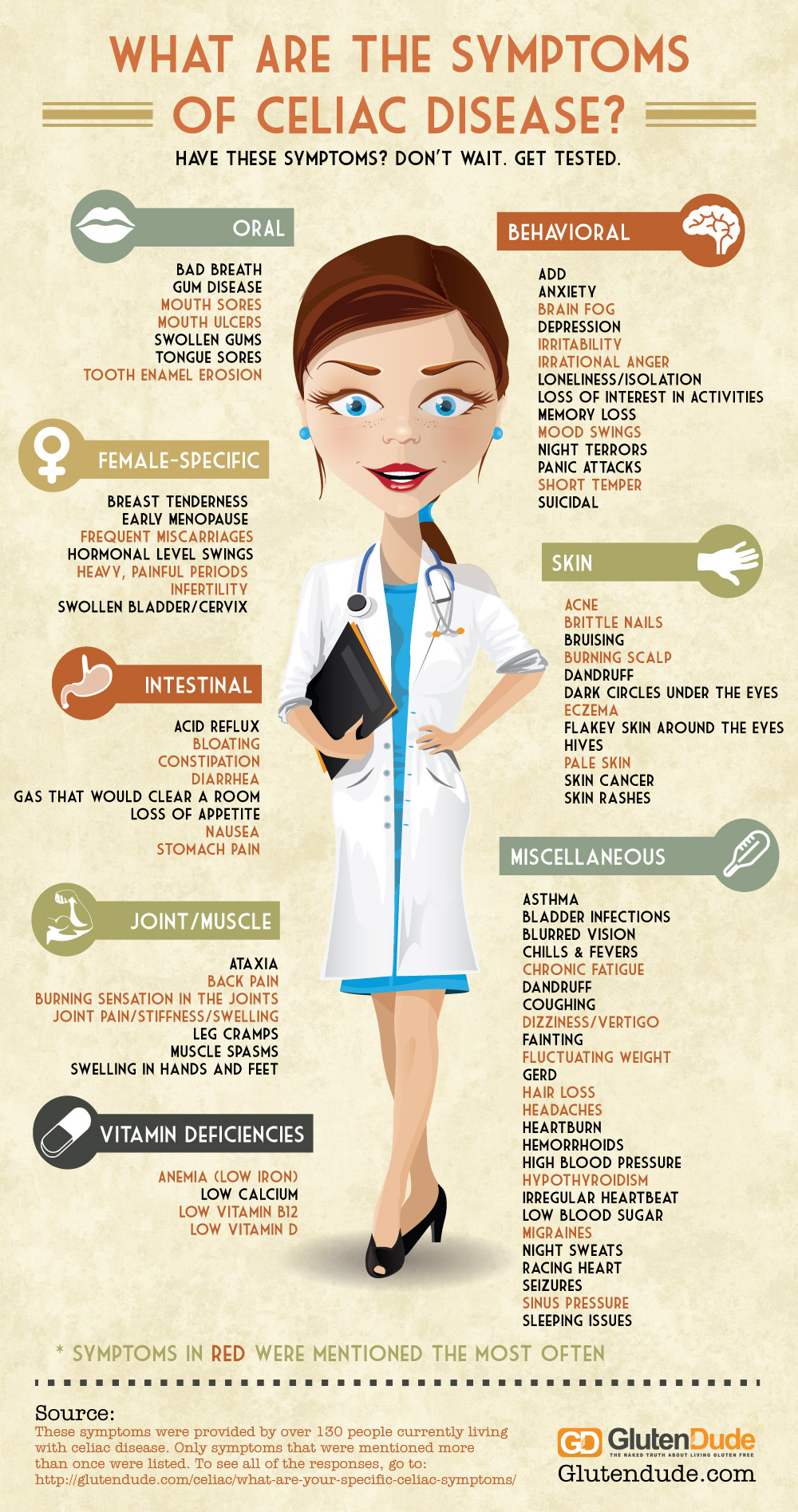
This is the fact that most people are surprised about. Who would have thought that Celiac, a mere food allergy, could cause systemic damage to the human body? Well, the truth is, Celiac is not just a food allergy or intolerance. It's an auto-immune disease that actually causes the body to attack itself when gluten is ingested. As with other auto-immune diseases, the symptoms can impact every body system. Here are several symptoms caused by Celiac Disease, broken down by system. Keep in mind that some symptoms affect more than one system.

Some of these symptoms are more common than others, and this list is not all-encompassing by any means. I have put an asterisk next to the symptoms I suffered with prior to my diagnosis, just to give you a reference as to how many could be at play simultaneously. Most of these symptoms come back when I accidentally ingest gluten in some form, and last anywhere from one to six weeks. (Symptoms were gathered from the National Foundation for Celiac Awareness, Celiac Disease Headquarters, Celiac Support Association, Recognizing Celiac Disease, Coeliac UK, and other sources. I have also included a few info-graphics at the bottom for quick reference.)

**Keep in mind that this is not a medical blog and I have no medical background. If you find that you have several of these symptoms, I would suggest doing some more research and contacting your doctor for testing.**


Circulatory/Cardiovascular System (circulates blood and nutrients throughout the body)
Anemia*
Angina
Arterial plaque
Asthma*
Blood pressure changes
Blood vessel inflammation
Fainting
Heart palpitations*
Nosebleeds


Digestive System (digests and processes food)
Abdominal Pain*
Acid Reflux*
Bad breath
Bloating
Constipation*
Diarrhea*
Dysphagia (difficulty swallowing)*
Food intolerance*
Gallstones*
Gas*
Gastric ulcers
GERD*
Heartburn*
Hemorrhoids*
Lactose intolerance*
Leaky gut
Low blood sugar
Malabsorption leading to weight gain or weight loss*
Mouth sores
Mouth ulcers
Nausea*
Swollen gums*
Tongue Sores
Tooth and gum pain*
Tooth enamel erosion*
Vitamin deficiency*
Vomiting*


Endocrine System (regulates glands and hormone production)
Blood sugar changes
Dry mouth*
Hormone imbalances*
Hypothyroidism
Hyperthyroidism
Weight fluctuations (seemingly unrelated to food)*


Immune System/Lymphatic Systems (transport and defense system against disease)
Anemia*
Asthma*
Auto-immune disorders
Fatty Liver Syndrome (non-alcoholic)*
Food Allergies*
Hypothyroidism
Hyperthyroidism
IgA Deficiency
Lymphoma
Rheumatoid Arthritis
Rhinitis
Weakened/Sensitive immune system*


Integumentary System (consists of skin, hair, and nails)
Acne*
Brittle nails*
Bruising*
Dandruff
Dermatitis Herpetiformus  (DH)*
Dry skin*
Edema
Exzema
Flaky skin/lips*
Hair loss
Hangnails*
Hives*
Ingrown toenails*
Nail fungus
Peeling lips*
Peeling nails
Rashes*
Skin cancer
Swelling*


Muscular System (works with several other systems to permit movement, maintain posture, and circulate blood)
Ataxia
Leg (and other muscular) cramps*
Muscle pain*
Muscle spasms*
Swelling*
Tongue Sores
Weakness*


Nervous System (transmits signals throughout your body)
ADD
ADHD
Anxiety*
Apathy*
Ataxia
Autism
Blood pressure changes
Brain fog*
Chills*
Constant need to fidget*
Depression*
Dizziness*
Dry or watery eyes*
Fatigue*
Hot/cold flashes*
Insomnia*
Irrational anger/irritability*
Learning disorders
Listlessness*
Memory loss*
Migraine*
Narcolepsy
Nerve pain*
Night Sweats*
Nocturia (waking several times at night to use the restroom)*
OCD*
Panic attacks*
Restlessness*
Seizures
Sleep disorders*
Suicidal thoughts
Tinnitus/ringing in the ears*
Vertigo
Weakness*


Reproductive System - Female (involved in the production of hormones and gametes for reproduction)
Amenorrhea (sporadic or infrequent menstrual periods)*
Anemia during pregnancy
Childbirth complications
Delayed puberty*
Dysmenorrhea (painful menstrual periods)*
Dyspareunia (painful intercourse)
Early menopause
Fertility issues*
Infertility
Long-lasting Premenstrual Syndrome symptoms*
Miscarriages
Ovarian Cysts*
Painful periods*
Swollen cervix*


Respiratory System (involves the intake of breath and converting oxygen to carbon dioxide)
Asthma*
Bronchial Pneumonia*
Bronchitus*
Sinus pressure*


Skeletal System (provides structural support and protection)
Arthritis*
Bone fractures
Brittle bones
Joint pain*
Joint stiffness*
Joint swelling*
Osteoporosis
Tooth and gum pain*
Tooth enamel erosion*


Urinary System (balances fluids in the body and the process of excretion of such fluids)
Bladder infections*
IgA Nephropathy
Kidney Stones
Urinary tract infections


Info-graphic courtesy of Schar Gluten Free


Info-graphic courtesy of Gluten Dude


Friday, January 10, 2014

the path to recovery: 10 things about celiac I wish I knew before

I've had a surprising number of people tell me recently that they think they might have some level of gluten intolerance, and they have asked for advice on starting this journey to healing. I figured it was high time I posted some of the pointers and pitfalls I have learned while going through my own Celiac journey.

1. Get tested. There are a few different tests doctors can do to diagnose Celiac/gluten intolerance. One is a blood test, which is known to be somewhat inaccurate. Many people with gluten issues will get a negative on the blood test, but it's a start and it's easy to do.

The more complex way of getting tested is an endoscopy. Many doctors will suggest this, and many will say it's an unnecessary surgery if you don't know what's wrong. The problem is this: to get accurate results on an endoscopy, you have to eat gluten consistently for several weeks. If you go through an elimination diet, cut gluten, feel better, and decide to do an endoscopy to back up your results, you will have to start eating gluten again for six weeks and go through all the pain and suffering of reintroducing it into your now-healing body. My suggestion is to research the symptoms to see how many you have, and talk to your doctor to make the best decision for you. Everyone is different and, unfortunately, there is no one perfect way to go about it.

2. Cut out the gluten. Once you find out that you have Celiac or gluten intolerance, the key to remember is that NO gluten is ok.

None.

Not even a speck, (probably) for the rest of your life.

I will harp on this over and over again, because mainstream media and most of your friends will not understand this. They will tell you over and over again that because Celiac is not an allergy, a little bit won't hurt you. Of course, seeing celebrities tweet about their gluten intolerances while posting pictures of themselves eating cheeseburgers and pizza the next day doesn't help our plight.

What they don't understand is that Celiac an Auto-Immune disease that actually causes your body to attack ITSELF any time you ingest gluten. The amount of gluten that you can fit on the nail of your pinky finger can cause severe reactions and mucosal damage to your intestines.


Cutting out gluten can seem easy to an outsider: stop eating bread and crackers and you're good, right? Well, it's not quite as easy as that. Because everyone is different, you may find you react to even the slightest touch of gluten. A "gluten free" label on a box doesn't automatically mean a product is processed in a dedicated gluten-free factory. Cross contamination is a very serious threat to those of us who cannot tolerate gluten in any way, shape, or form. I have found the internet to be a necessary tool while grocery shopping. (I will admit our first few months of grocery trips were filled with anxiety and internet searches in the middle of each aisle.) Most websites will have a "gluten" entry in the FAQ section, telling you whether their factory has dedicated lines or factories for their products.

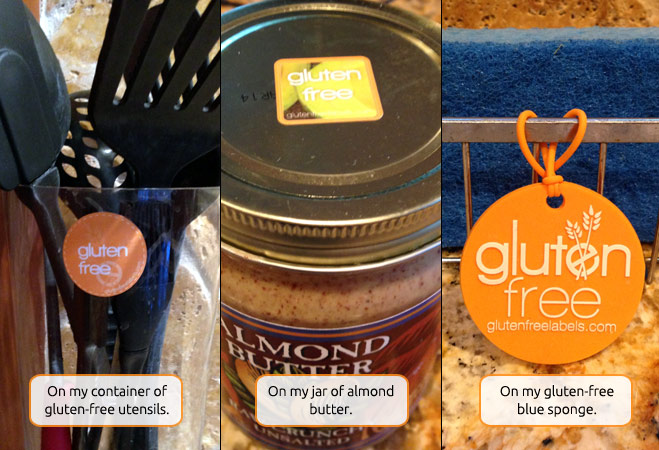
Cross contamination is to be expected in factories and restaurants, but it can also happen in your own home. I suggest replacing your pots and pans, your toaster, cooking utensils, Tupperware/storage containers, and any non-stick or plastic cooking appliances. Disinfect your microwave and fridge. It's easier for a Celiac to have a dedicated gluten free kitchen, though that is not always feasible for everyone. If you must have gluten in the house, store it in a separate area and disinfect all counters and appliances between cooking with gluten and preparing your food. Label your gluten free utensils and store them in a separate area. This was something I learned the hard way, and hope that you won't have to.

Photo courtesy of Gluten Dude
The most important thing to remember is that cheating will set back your healing. It might be easier to stop at a fast food joint than to think ahead and pack snacks, but your body will regret it in the end.

3. Beware of hidden gluten. Gluten is everywhere. I once was sick for almost a month because the eggs we bought were sprayed with an anti-cracking spray containing gluten. Do your research, because there are naturally gluten free products that could, in fact, contain gluten. Oats, for example, do not have a gluten protein, but are often processed in factories (or planted in fields) also containing wheat. Certified gluten free oats are a must for anyone with Celiac. Some fruits are sprayed with gluten-containing chemicals for preservative purposes.

Gluten can also be found in several non-food places. Glue, makeup, detergent, shampoo, lotion, and hairspray can have gluten in them. If you find that you are still getting sick despite cutting out gluten from your diet, you may want to check into your other products. Pet food is another place to watch - you feed your pet something with gluten, your pet licks itself (or things around your house), you touch it and then touch your face or mouth or food, and voila, sick central.

4. Find a blog or book or support group. They are all over the place. Finding a community (or author  or blogger or friend) who has Celiac can be a huge part of the healing process. Not only can others help you to troubleshoot issues, help you find recipes and brands that are safe, but they can help you to realize that


you

are

not

alone.

Some of my favorite bloggers are Gluten Dude and Celiac and the Beast. They both use humor and sarcasm to relate their Celiac stories and advice. They are my kind of people. If that's not your style, all you need to do is google "celiac bloggers" and hundreds of them will come up. Just make sure that whoever you follow has done the research and knows the facts. The last thing you want to do is to base any of your lifestyle changes on someone who doesn't know what they are talking about.

5.  Keep a food diary. You have probably done this in your journey to figure out what the heck was wrong with you, but I would recommend keeping it for a while. The reason for this is that down the road, you may find that you have developed other food allergies and intolerance. Around the time of my diagnosis, I found out I was lactose intolerant. About six months later, I had to do another elimination round to find out that I can't eat anything with corn or corn derivatives.

6. Don't rely too heavily on any one food while you heal. I wish I had known this when I was a baby Celiac. I had my mourning period and then started to find new recipes. We had corn tortillas available here, and it became Mexican night. A few nights a week. Tostadas, and tacos, and burritos galore. Until a few months later when I started feeling awful again. Relying too much on one food (in this case, corn) while your gut is healing can lead to an intolerance down the line.Vary what you eat and go easy on the grains while you heal.

7. Learn your symptoms. If you are eating gluten continually now, you probably have some long-term discomfort. Once you make a commitment to go 100% gluten free, though, your symptoms will change. Your body is healing, and will react severely upon ingesting even a small amount of gluten because it's now a foreign substance. Knowing your own personal symptoms will help you to narrow down whether you ate something with gluten (and writing in your food diary will help you pinpoint what it was) or whether you're just feeling under the weather.

Unfortunately, everyone's Celiac is different. While there are some symptoms that most Celiacs have in common (like gastrointestinal issues like flatulence, diarrhea, reflux, bloating, and being severely over or underweight due to malabsorption), there are many that are a bit more rare, including neurological issues (like anxiety, memory loss, irritability, and migraines).

For instance, I nearly always have a panic attack, brain fog, intense sleepiness lasting for days and then insomnia lasting for weeks, and stomach pain when I have eaten something with gluten in it, in addition to several of the classic symptoms.

Infographic courtesy of Gluten Dude 
8. Know that some of the symptoms you feel now will go away, and others may not. Depending on what your symptoms are, how long you've gone undiagnosed, and your body type, you may feel better immediately or you may have long-term symptoms that will continue. These symptoms could be residual effects from the Celiac, or other disorders that are common in those with Celiac, like IBS, Hashimoto's, arthritis, or even Lupus.

In my case, the asthma and migraines cleared up almost immediately, and typically only bother me when I've been contaminated. Other symptoms, like the lack of energy, constant heartburn, and aching joints are issues that started with Celiac and haven't gone away for good.

There are things you will have to learn to live with, and there are a lot of nice natural remedies to help ease them a little bit. Peppermint oil, activated charcoal, and papaya supplements can help ease the pain after a "glutening." Also keep in mind that several of your long-term symptoms are caused by the malabsorption of your food and vitamin loss. I recommend talking to your doctor and checking to see if you have any vitamin deficiencies.

9. Eating out can be difficult...but not impossible. Apps like Find Me Gluten Free are a lifesaver to me when we travel in the U.S. I always go through the app and read reviews and then call the restaurant, speaking to a manager. Since I have several food intolerances, I explain ahead of time the accommodations I will need. Sometimes the manager will tell me it's not possible, and that's okay. I'd much rather learn that in a phone conversation than an hour after I've eaten. If the manager sounds confident and is able to explain the restaurant's policy on cross-contamination, we will make a reservation for a day and time that manager will be there at the restaurant.


When we arrive, I ask the host or hostess to talk to that manager. I introduce myself and they will usually seat us, introduce us to the servers, and go through their policies again to ensure the server is aware of how serious the condition is. Many restaurants are used to people coming in and asking for gluten free items, but very few of them are asking from the standpoint of avoiding illness, so it's important to make the distinction.

It does become tiring to do this EVERY TIME you go out and eat, but it's worth it to stay healthy. Eventually, the people around you will realize that you wouldn't go to all this length for a fad diet and they may even start to advocate for you. Several times this summer, friends and family members were the ones to ask the servers about their gluten free menus or kitchen policies so that I didn't have to.

10. On the note of friends... You will probably have friends, relative, co-workers, acquaintances, or even strangers give you their opinions on your "gluten issues." Some will be loyal and do everything they can to learn about Celiac and how to help you, and some will be fiercely opposed to anything being wrong with you.

You may have a mourning period as you realize that your whole life will revolve around your diagnosis for a while, until it becomes second nature.

As you realize that social engagements will never be the same, and traveling becomes stressful instead of relaxing and adventurous. 

As you come to terms with some of the symptoms that may never go away all because of a silly protein in some too-common grains. 

As you start to find some stability and revel in your new-found baking prowess, only to realize that your newest batch of muffins or bread loaves are crumbly and tasteless.

It gets tiring having to argue with people that Celiac is a disease and not a fad, but don't let it get you down. You will find out quickly who your true friends and supporters are - and they will help you get you through this. Surround yourself with people who are positive and encouraging, because you will probably have enough emotional roller coasters all on your own as you go through this lifestyle change. (This is also a good reason to get involved with a support group or community or even blog - the Celiac community is a very outspoken and supportive one.)

And then you'll get to that point where you realize you haven't been contaminated in months, instead of days. You'll impress your friends with your "icky gluten free food" that was so delicious, they didn't realize it was gluten free until you told them. You'll stop craving gluten-y food all the time, because you'll finally feel like yourself again. You won't feel the need to check every single product over and over again to double check that there isn't any gluten in the ingredients (though it's good to check occasionally since companies change their practices all the time.) You will come to terms with your disease and realize that it's only a small part of you, that you've overcome it and taken back your life.

You will know that not only can you survive this, but you can thrive.


I know this was a long post, but in all honesty, it sums up what I've learned over the past year and a half. It's what I wish I had found when I was first diagnosed, and I hope that it's able to help even one person as they start the road to healing. If you have any questions, please feel free to leave a comment or hit me up on facebook!

Thursday, July 11, 2013

folsom fare: a gluten free guide to eating in folsom (part 1)

We made it back to Reno late, and got up early the next morning to head to Folsom. By this point, I had my cooking gear packed in a way that we could easily take it with us. When we moved from Folsom a few years ago, they had just begun construction on the Whole Foods, so I knew that I'd have some options even if I couldn't find any safe restaurants.

One place I was really looking forward to going was Cooper's Coffee House. This had once been an It's a Grind franchise, but the owners wanted to branch out and offer more alternative options, so they left the franchise and reopened as Cooper's. I have been following them on facebook since we left Folsom, and had seen posts on gluten free options and dairy-free alternatives. I hadn't had coffee since coming back to the states, and was excited to finally be able to do so!


Stacy was the one who helped us when we came in, and walked us through some of the pre-packaged gluten free pastries. She wasn't sure about the coffee but was extremely helpful in letting me see the ingredients and allowing me to check company websites to see if the brands were gluten free/corn free. They were, and she made sure to sanitize all the equipment before making my drink. I got an iced vanilla latte with coconut milk and it was spectacular! The pastry was dry and crumbly, so I didn't order any more of those. We went a few more times while in Folsom and had great experiences with the coffee every time.


For lunch that same day, we went to BJ's. I was excited to learn a few months ago that BJ's had a gluten free pizza made from rice flour that would be safe for me. When I checked with our server, she had the manager come out and let me know exactly what ingredients were in what I had ordered. I really felt like they cared about my well-being and we felt confident in our choice to eat there! Ben and I shared a thin crust pizza and I got a house-brewed root beer to go with it. Everything was delicious!


**Edit as of 7.11.14: BJ's brewed root  beer is no longer free of corn syrup, which is really too bad, as it's delicious. They do, however, have Crispin apple cider on tap - this is a delicious cider and is gluten/corn free.**


One of the things we were excited to do in Folsom was to shop. They have great outlets and a beautiful new outdoor mall area. Being fourth of July weekend, it was 104 degrees and after a few hours of shopping, we were craving something cold. I went into the Pinkberry, not expecting to be able to actually get any frozen yogurt. The woman behind the counter answered all of my questions, though, and it turns out she has gluten intolerance and has family members who are celiacs. She told me what she usually gets and I took her suggestions, getting a mango fro-yo with fresh fruit toppings. Delish!


Stay tuned for Part 2, coming soon!